manual canon t3
Summary
Lost your Canon T3 manual? Find a free, downloadable PDF here & unlock all the amazing features of your camera! Start taking better photos today. #CanonT3
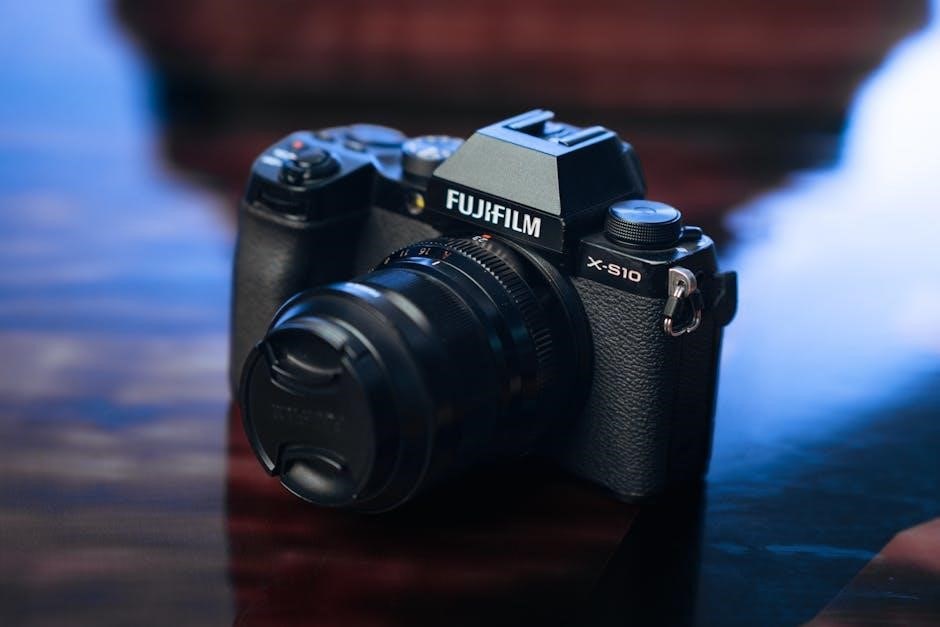
Canon EOS Rebel T3 (1100D) ⎼ A Comprehensive Guide
This guide unlocks a new world of photographic possibilities with your Canon Rebel T3, offering a beginner-friendly manual for understanding and operation.
The Canon EOS Rebel T3 (also known as the 1100D) represents an excellent entry point into the world of Digital Single-Lens Reflex (DSLR) photography. This guide serves as a comprehensive resource, designed specifically for beginners eager to explore the full potential of their new camera. Whether you’re a complete novice or have some prior experience, this manual will demystify the camera’s features and empower you to capture stunning images.
We’ll navigate through the camera’s controls, menu systems, and shooting modes, providing clear explanations and practical examples. This introduction aims to build a solid foundation, enabling you to move beyond automatic settings and embrace creative control. Prepare to unlock a new realm of photographic expression with your Canon Rebel T3!
What’s in the Box? ⎼ Unboxing Your Camera
Upon opening your Canon Rebel T3 box, you should find several key components. These typically include the camera body itself, the EF-S 18-55mm kit lens – a versatile starting point for various photographic scenarios. You’ll also receive a Canon LC-E6 battery charger, a Canon LP-E6 lithium-ion battery, and a wide strap for comfortable carrying.
Essential documentation is also included: the camera’s instruction manual (a vital resource!), a warranty card, and various software CDs for image editing and remote control. Additionally, you can expect body cap, lens cap, and interface cable. Carefully inspect all items to ensure everything is present and undamaged before proceeding. Retain the packaging for potential warranty claims or resale.
Camera Body Overview ⎼ Buttons and Dials
The Canon Rebel T3’s body features a straightforward layout designed for ease of use. The Power switch initiates camera operation, while the Shutter button captures images. The Mode Dial allows selection of various shooting modes – Auto, Program, Shutter Priority, Aperture Priority, and Manual.
On the rear, the four-way controller navigates menus and selects focus points. The ‘Set’ button confirms selections. The ‘Info’ button displays shooting information on the LCD screen. The ‘Live View’ button activates Live View shooting. Dials control image zoom and settings adjustments. Familiarizing yourself with these controls is crucial for efficient operation and unlocking the camera’s full potential.
Front Panel Features
The Canon Rebel T3’s front panel houses essential controls and connections. The lens mount, compatible with EF and EF-S lenses, is the primary feature. The Release button allows for easy lens detachment. Adjacent to the mount is the autofocus assist beam emitter, aiding low-light focusing.
The front panel also includes the remote control receiver for optional remote shutter release. A self-timer lamp indicates self-timer activation; The microphone is positioned for optimal audio recording during video capture. Understanding the location and function of these elements is key to proper camera handling and achieving desired results.
Rear Panel Features
The rear panel of the Canon Rebel T3 is dominated by the 2.7-inch LCD screen, used for live view shooting, image playback, and menu navigation. To the right of the screen are buttons for navigating the menu system and reviewing captured images. The ‘Set’ button confirms selections within the menus.
The panel also features the ‘Live View’ button, initiating live view mode for precise composition. The ‘Display’ button toggles information overlay on the LCD. The ‘Info’ button cycles through different display modes. Finally, the electronic viewfinder diopter adjustment allows for comfortable viewing for users with varying eyesight.
Top Panel Features
The Canon Rebel T3’s top panel houses essential controls for shooting. The main dial selects shooting modes – Auto, Program, Shutter Priority, Aperture Priority, and Manual. Adjacent to this is the power switch, activating and deactivating the camera. The shutter button initiates image capture, with half-press for autofocus and full-press to take the picture.
A small mode dial allows quick access to scene modes. The exposure compensation dial adjusts brightness levels. Furthermore, the top panel includes the built-in flash hot shoe, enabling attachment of external flash units for enhanced lighting control. These features provide direct control over key camera settings.
Understanding the Menu System
The Canon Rebel T3’s menu system is navigated using the directional buttons and the SET button. It’s logically organized into several tabs: Shooting, Creative, Playback, and Setup. The Shooting menu controls image quality, autofocus settings, and drive modes; The Creative menu allows adjustments to picture styles and white balance. Playback handles image review and deletion.
The Setup menu manages camera settings like date/time, display options, and menu language. Custom Function settings allow personalized control assignments. Familiarizing yourself with this structure is crucial for unlocking the camera’s full potential and tailoring it to your shooting preferences.
Shooting Menu Options
Within the Shooting menu, you’ll find vital settings for controlling image capture. Image Quality allows selection between RAW and JPEG formats, and resolution sizes. Autofocus settings dictate how the camera locks focus – One-Shot for static subjects, and AI Servo for tracking moving objects. Drive Mode controls single shots, continuous shooting, or self-timer functions.

Metering Mode determines how the camera evaluates light, impacting exposure. Picture Style offers preset color profiles like Standard, Portrait, and Landscape. White Balance adjusts color temperature for accurate rendering. Exploring these options allows precise control over your images, adapting to various shooting scenarios.
Setup Menu Options
The Setup menu houses essential camera configurations. Date/Time settings ensure accurate timestamps on your photos. Display settings control LCD brightness, information overlays, and grid display. Auto Power Off manages battery conservation by automatically shutting down the camera after inactivity. Memory Card formatting prepares cards for new images, erasing existing data.
Sensor Cleaning allows for automatic dust removal, maintaining image quality. Button Customization lets you personalize button functions for quicker access. Video settings control video recording parameters. Language selection adjusts the menu interface. Reset settings revert the camera to factory defaults, useful for troubleshooting.
Custom Function Settings
Canon’s Custom Functions offer personalized control over your Rebel T3. These settings allow tailoring the camera to your shooting style. You can assign specific functions to buttons for quicker access, streamlining your workflow. Options include adjusting the autofocus behavior, customizing the shutter button’s half-press action, and modifying the Quick Control screen layout.
Further customization includes setting the release without card, enabling mirror lockup for sharper images, and choosing the auto-illuminator behavior. Explore these functions to optimize the camera’s response and enhance your photographic experience, making it truly your own.
Basic Photography Settings
Mastering fundamental settings is crucial for utilizing your Canon Rebel T3 effectively. Begin with understanding Shooting Modes: Auto simplifies operation, Program offers creative control, Shutter Priority dictates motion blur, Aperture Priority manages depth of field, and Manual grants full command. ISO settings control light sensitivity – lower values for bright conditions, higher for low light;
Achieve accurate colors with White Balance, adjusting for different light sources. Explore Focus Modes, choosing between Autofocus for convenience and Manual Focus for precision. These core settings form the foundation for capturing stunning images with your Rebel T3.
Shooting Modes ⏤ Auto, Program, Shutter Priority, Aperture Priority, Manual
The Canon Rebel T3 offers diverse shooting modes to suit various skill levels and creative intentions. Auto mode simplifies photography, letting the camera handle all settings. Program (P) mode provides creative control over ISO, white balance, and picture style while maintaining automatic exposure. Shutter Priority (Tv) allows you to set the shutter speed, controlling motion blur.
Aperture Priority (Av) lets you define the depth of field, influencing what’s in focus. Finally, Manual (M) mode grants complete control over both aperture and shutter speed, offering ultimate creative freedom. Experiment with each mode to understand their impact on your images.
ISO Settings ⏤ Understanding Sensitivity
ISO determines your camera’s sensitivity to light. Lower ISO values (like 100 or 200) are ideal for bright conditions, producing cleaner images with minimal noise. As light decreases, increasing the ISO (400, 800, 1600, or higher) makes the sensor more sensitive, allowing for shooting in darker environments.
However, higher ISO settings introduce digital noise, which can degrade image quality. The Rebel T3’s ISO range allows flexibility, but finding the right balance between brightness and noise is crucial. Experiment to determine the highest usable ISO for your specific needs and lighting conditions.
White Balance ⏤ Achieving Accurate Colors
White balance ensures colors are rendered accurately, neutralizing color casts caused by different lighting sources. The Canon Rebel T3 offers several white balance presets, including Auto, Daylight, Cloudy, Tungsten, Fluorescent, and Flash. Auto white balance works well in many situations, but can sometimes be inaccurate.
For precise color, use the appropriate preset or create a custom white balance by pointing the camera at a white or gray card. Incorrect white balance results in images appearing too warm (yellowish) or too cool (bluish). Mastering white balance is key to achieving natural-looking and visually appealing photographs.
Focus Modes ⎼ Autofocus and Manual Focus
The Canon Rebel T3 provides both Autofocus (AF) and Manual Focus (MF) options. Autofocus simplifies focusing, letting the camera automatically achieve sharpness. One-Shot AF is ideal for stationary subjects, while AI Servo AF tracks moving subjects continuously. The camera’s nine autofocus points allow for selective focusing within the frame.

Manual Focus gives you complete control, useful in low light or when autofocus struggles. Use the focusing ring on the lens and the viewfinder to fine-tune sharpness. Understanding when to use AF versus MF is crucial for consistently sharp images, adapting to various shooting scenarios and subject movement.
Lenses and Accessories
Expanding your Canon Rebel T3’s capabilities involves exploring compatible lenses and essential accessories. The T3 utilizes Canon’s EF and EF-S lens mounts, offering a vast selection of lenses for diverse photographic needs – from wide-angle landscapes to telephoto wildlife shots. Investing in quality glass significantly impacts image quality.
Essential accessories include a sturdy tripod for sharp, stable images, especially in low light. Reliable memory cards are crucial for storing your photos and videos; Extra batteries ensure uninterrupted shooting during extended sessions. Lens filters, like UV or polarizing filters, can enhance image quality and protect your lens.
Compatible Lenses ⎼ EF and EF-S Mounts
The Canon EOS Rebel T3 utilizes both EF and EF-S lens mounts, providing a broad range of lens options. EF lenses are compatible with all Canon EOS cameras, offering a larger image circle suitable for full-frame sensors. EF-S lenses are designed specifically for cameras with APS-C sensors, like the T3, providing a more compact and affordable option.
Choosing between EF and EF-S depends on your needs and budget. EF lenses offer versatility, while EF-S lenses provide excellent value. Explore options like kit lenses, prime lenses for sharpness, and zoom lenses for flexibility. Always verify compatibility before purchasing a lens to ensure optimal performance with your Rebel T3.
Essential Accessories ⎼ Tripods, Memory Cards, Batteries
To maximize your Canon Rebel T3 experience, several accessories are highly recommended. A sturdy tripod is crucial for sharp images, especially in low light or for long exposures. Invest in a compatible SD memory card with sufficient capacity and speed for storing your photos and videos; consider a Class 10 or UHS-I card.
Having an extra battery is essential for extended shooting sessions, preventing interruptions during important moments. A camera bag protects your camera and accessories during transport. Don’t forget lens cleaning supplies to maintain image quality. These accessories enhance usability and ensure you’re prepared for any photographic opportunity.
Filters ⎼ Enhancing Your Images
Lens filters are invaluable tools for enhancing your Canon Rebel T3’s photographic capabilities. A UV filter protects your lens from scratches and dust, while a polarizing filter reduces glare and enhances colors, particularly in landscapes. Neutral Density (ND) filters allow for longer exposures in bright conditions, creating motion blur effects.
Colored filters can add creative effects to black and white photography. Consider a graduated ND filter to balance exposure in scenes with bright skies. Experimenting with different filters unlocks new creative possibilities and improves image quality, allowing you to capture stunning visuals with your Rebel T3.
Image Quality and File Formats
Understanding image quality settings on your Canon Rebel T3 is crucial for achieving desired results. The camera offers both RAW and JPEG file formats. JPEG files are compressed, resulting in smaller file sizes, ideal for quick sharing and limited storage. However, RAW files retain all image data captured by the sensor, providing maximum flexibility for post-processing and editing.
Choosing the appropriate image size and resolution impacts detail and file size. Higher resolutions are suitable for large prints, while lower resolutions are sufficient for web use. Experiment with different settings to balance quality and storage needs.
RAW vs. JPEG ⎼ Choosing the Right Format
Deciding between RAW and JPEG formats on your Canon Rebel T3 significantly impacts post-processing capabilities. JPEG images are pre-processed by the camera, compressing the file and reducing editing flexibility. They are convenient for immediate use and sharing, but lose data with each edit.
RAW files, conversely, contain unprocessed data directly from the sensor. This provides extensive control over white balance, exposure, and detail recovery during editing. While RAW files require more storage space and editing software, they offer superior image quality and creative freedom. Consider RAW for important shots needing extensive adjustments.
Image Size and Resolution
Understanding image size and resolution is crucial for optimal results with your Canon Rebel T3. Resolution, measured in megapixels (MP), determines the level of detail captured in your photos. Higher resolutions allow for larger prints and more cropping flexibility, but also create larger file sizes.
The Rebel T3 offers various size options. Larger sizes, like the maximum 12.2MP, are ideal for prints and detailed work. Smaller sizes are suitable for web use or when storage space is limited. Balancing resolution with file size is key; consider your intended use before selecting a setting.
Video Recording with the Rebel T3
The Canon Rebel T3 allows for video recording, offering a stepping stone into videography. While not its primary strength, it’s capable of capturing memorable moments in motion. Understanding the available settings is key to achieving the best possible video quality.
You can record standard definition (SD) video at various frame rates. Frame rate impacts smoothness; higher rates (like 30fps) are better for fast action, while lower rates (24fps) offer a more cinematic look. Pay attention to audio recording options, as external microphones can significantly improve sound quality compared to the built-in microphone.
Video Resolution and Frame Rates
The Canon Rebel T3 records video in standard definition (SD), specifically 640×480 pixels. While it doesn’t offer high-definition recording like later models, understanding the frame rate options is crucial for optimal results. The camera supports 30 frames per second (fps) for smooth motion, ideal for everyday videos and action shots.
A 24fps option provides a more cinematic aesthetic, mimicking the look of traditional film. Choosing the correct frame rate depends on your desired style and the subject matter. Remember that higher frame rates require more storage space on your memory card. Experiment to find what best suits your needs!
Audio Recording Options
The Canon Rebel T3 features a built-in microphone for capturing audio alongside your videos. However, the internal microphone’s quality is limited, often picking up ambient noise and producing less-than-ideal sound. For improved audio, consider using an external microphone. The camera has a standard 3.5mm microphone input jack, allowing you to connect a variety of external microphones.
These can range from simple lavalier microphones for interviews to shotgun microphones for directional sound capture. Adjusting the audio level manually is essential to prevent clipping or excessively quiet recordings. Monitoring the audio while recording is highly recommended for best results.
Troubleshooting Common Issues
Encountering problems with your Canon Rebel T3 is common, but many are easily resolved. If the camera fails to power on, first ensure the battery is fully charged and correctly inserted. Check the battery contacts for any debris or corrosion. Focusing issues often stem from incorrect focus mode selection or insufficient light. Try switching to continuous autofocus or using manual focus.
Error messages displayed on the LCD screen usually indicate a specific problem; consult the camera’s manual for detailed explanations and solutions. Regularly check for firmware updates, as these often address bugs and improve performance.
Camera Not Turning On
If your Canon Rebel T3 refuses to power on, begin with the simplest checks. Confirm the battery is fully charged using the charger and indicator light. Ensure the battery is securely inserted into the battery compartment, checking for proper alignment. Inspect the battery contacts within the camera for any signs of dirt, dust, or corrosion – clean them gently if necessary.
Also, verify the power switch is fully engaged in the ‘ON’ position. If the issue persists, try a different, known-good battery to rule out a faulty power source. A reset might also help; remove the battery and memory card, wait a few minutes, and reinsert them.
Focusing Problems
Experiencing blurry images with your Canon Rebel T3 often stems from focusing issues. First, ensure you’ve selected the correct autofocus (AF) mode for your subject – One-Shot for stationary objects and AI Servo for moving subjects. Verify the focus point is positioned directly over your intended subject within the viewfinder.
If using autofocus, confirm sufficient light is available, as low light can hinder performance. Try switching to manual focus (MF) and carefully adjusting the focus ring on the lens. Check the lens for any damage or dirt that might obstruct focusing. Finally, ensure the subject is within the lens’s minimum focusing distance.
Error Messages and Solutions
The Canon Rebel T3 displays error messages to indicate specific camera issues. “Err 00” typically signals a mechanical problem with the shutter, requiring professional repair. “Err 20” suggests a card error – try a different card or format the existing one. If you encounter “Err 99,” it often indicates a general internal error; restarting the camera is the first step.
For lens-related errors, ensure the lens is securely attached. Regularly check Canon’s support website for a comprehensive list of error codes and their corresponding solutions specific to the Rebel T3 model. Always consult the manual for detailed troubleshooting steps before seeking professional assistance.

Maintaining Your Canon Rebel T3
Consistent maintenance ensures your Canon Rebel T3’s longevity and optimal performance. Regularly clean the exterior with a soft, dry cloth. Avoid harsh chemicals or abrasive cleaners. Periodically inspect the lens for dust and fingerprints, using a lens cleaning kit. Proper battery care is crucial; remove the battery when storing the camera for extended periods and avoid extreme temperatures.
Keep the firmware updated via Canon’s website to benefit from bug fixes and improved functionality. Store the camera in a dry, dust-free environment. Following these simple steps will help preserve your Rebel T3 for years of enjoyable photography.
Cleaning the Sensor
Dust on the sensor can appear as spots in your images, necessitating careful cleaning. While preventative measures like lens changes in clean environments help, occasional cleaning is often required. Use a dedicated sensor cleaning kit – never attempt to clean the sensor with household items! These kits typically include a blower to remove loose dust and swabs for more stubborn particles.
Follow the kit’s instructions meticulously. Improper cleaning can damage the sensor. If you’re uncomfortable performing this task yourself, consider professional sensor cleaning services. Regular sensor cleaning ensures consistently sharp and clear images from your Canon Rebel T3.
Battery Care and Storage
To maximize the lifespan of your Canon Rebel T3’s battery, follow these guidelines. Avoid completely draining the battery before recharging, as this can reduce its capacity over time. Use the supplied Canon charger only; third-party chargers may damage the battery. Store the battery in a cool, dry place, away from direct sunlight and extreme temperatures.
If storing the battery for an extended period, charge it to approximately 40-60% before storage. Avoid storing a fully charged or completely discharged battery for long durations. Proper battery care ensures reliable power for your photography adventures with the Rebel T3.
Firmware Updates
Canon periodically releases firmware updates for the Rebel T3 to improve performance, add new features, and fix potential bugs. Regularly checking for updates is crucial for optimal camera functionality. Visit the Canon support website and navigate to the Rebel T3 (1100D) section to download the latest firmware.
Follow the instructions carefully during the update process, ensuring the camera has sufficient battery power. Interrupting the firmware update can render your camera unusable. Firmware updates are generally straightforward, but attention to detail is vital. Keeping your camera’s firmware current ensures a smooth and reliable shooting experience.